

Katch–McArdle
The most accurate BMR estimate when you know your body fat %.
To measure body fat % you can use calipers, a DEXA scan, BIA, or visually estimate from a reference chart.
Estimate your Total Daily Energy Expenditure and plan your nutrition with intent.
TDEE stands for Total Daily Energy Expenditure — the total energy a person uses in a day. To lose fat, eat less than your TDEE. To build muscle, eat a bit more than it. Knowing your TDEE tells you exactly how many calories to eat to drop fat, build muscle, or (in some cases) both.
Note. If you don't know your Body Fat %, see the reference image below the calculator.

Fill in your details and tap Calculate to see your daily energy expenditure.
TDEE isn't a single fixed number — it shifts with age, body composition, daily activity, and gender. Here's how each factor pulls on the calculation.


Age plays a small role in TDEE. In general, older people have lower BMR — and the lower the BMR, the lower the TDEE in most cases. Since lean mass burns calories and people tend to lose lean mass with age, fewer calories are burnt for the same body weight and exercise level. So TDEE may drop as one gets older.
Bigger bodies have more lean mass and lean mass burns more calories. The bigger the body, the higher the TDEE — it scales with height and weight. Moving a bigger body burns more calories too, which is why an estimate of current body fat % helps predict lean body mass and a more accurate TDEE.
Physical activity burns more calories and affects TDEE — but the effect can be smaller in certain instances. When someone becomes lazier after exercise and moves around a lot less than normal, NEAT levels drop and fewer additional calories are burnt as a consequence of training.
Women have approximately 12% higher body fat levels than men. For the same body weight, a female has less lean mass than a male and thus a lower TDEE compared to a male.
Contact Abhinav to learn how you can lose fat, gain muscle, and transform your body in a scientific way — using TDEE and many years of expertise in exercise and nutrition.
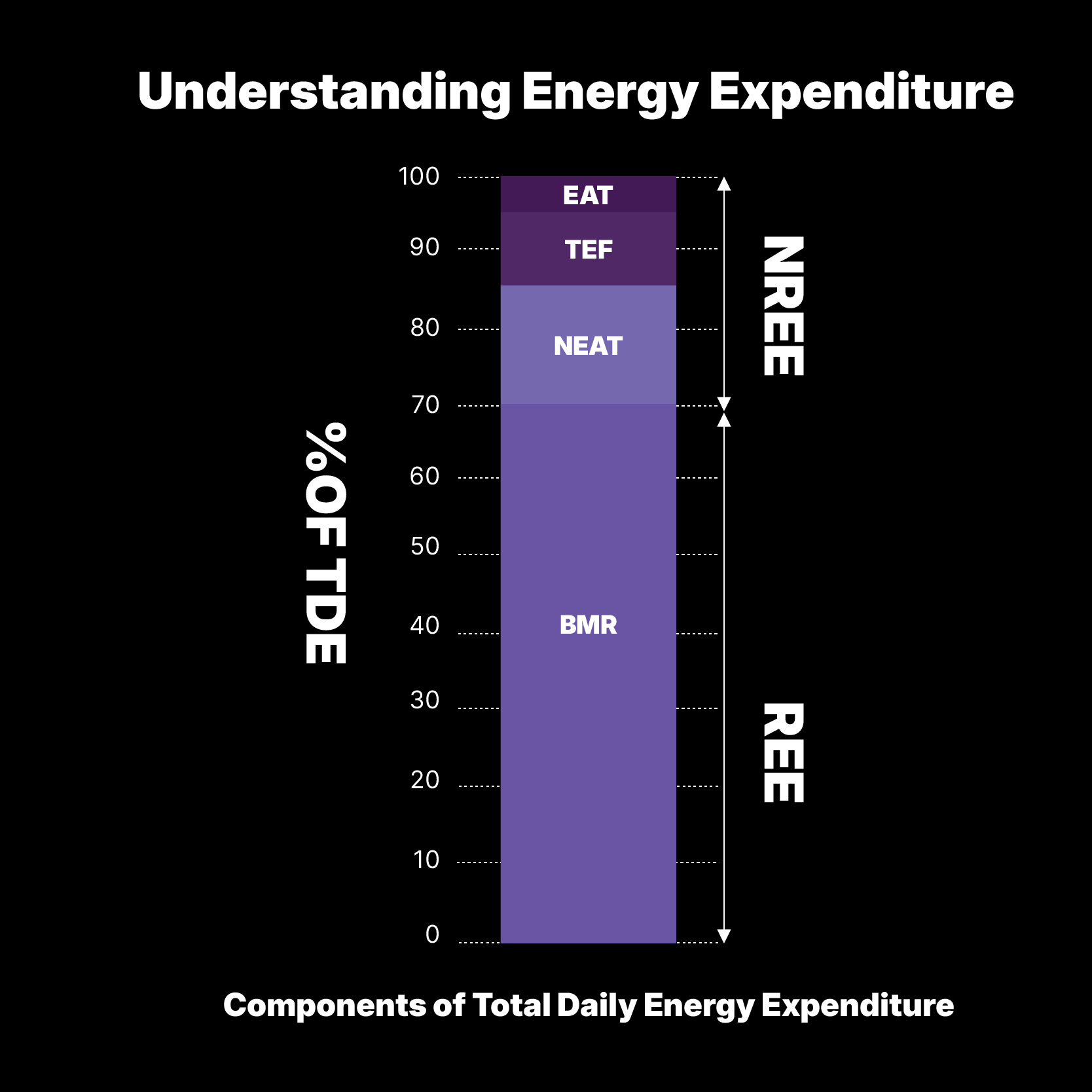
Your daily calorie requirement to maintain your weight is your TDEE — built on top of your BMR, the calories your body burns at rest. Here's the maths.
The most accurate BMR estimate when you know your body fat %.
To measure body fat % you can use calipers, a DEXA scan, BIA, or visually estimate from a reference chart.
Before Katch–McArdle, we used these two formulas — still solid when you don't have a body-fat measurement.
Once you have BMR, multiply it by the multiplier that matches your average week. That gives you TDEE.
Use our calculator above for an instant estimate, or book a consultation and we'll calibrate intake and macros around your goals.
To lose fat, you eat fewer calories than your maintenance TDEE. Your body draws the rest from fat stores. Over time, that's fat loss — but the deficit has to be sized so you stay healthy and keep your strength.
A female client maintains her current weight at this TDEE.
20% of 2,400 — the deficit her coach sets for her timeline.
2,400 minus 480 — the calorie intake while losing fat.
3,500 kcal ≈ 0.45 kg of fat. 3,500 ÷ 480 ≈ 7.3 days.
Calories tell you how much. Macros tell you what those calories are made of — and that's what a coach calibrates around your body, training, and goals.
Preserves lean mass during a deficit and keeps you fuller for longer.
Supports hormonal health, satiety, and fat-soluble vitamin absorption.
Whatever is left after protein and fat fuels training and recovery.
TDEE and BMR are estimates. If you aren't losing weight as expected after a week, drop another 100 kcal / day and reassess. If you're losing more than 0.45 kg / week, add 100 kcal / day back — losing weight too fast usually costs you muscle, which defeats the point.
Want this calibrated around your training, your goals, and your week?
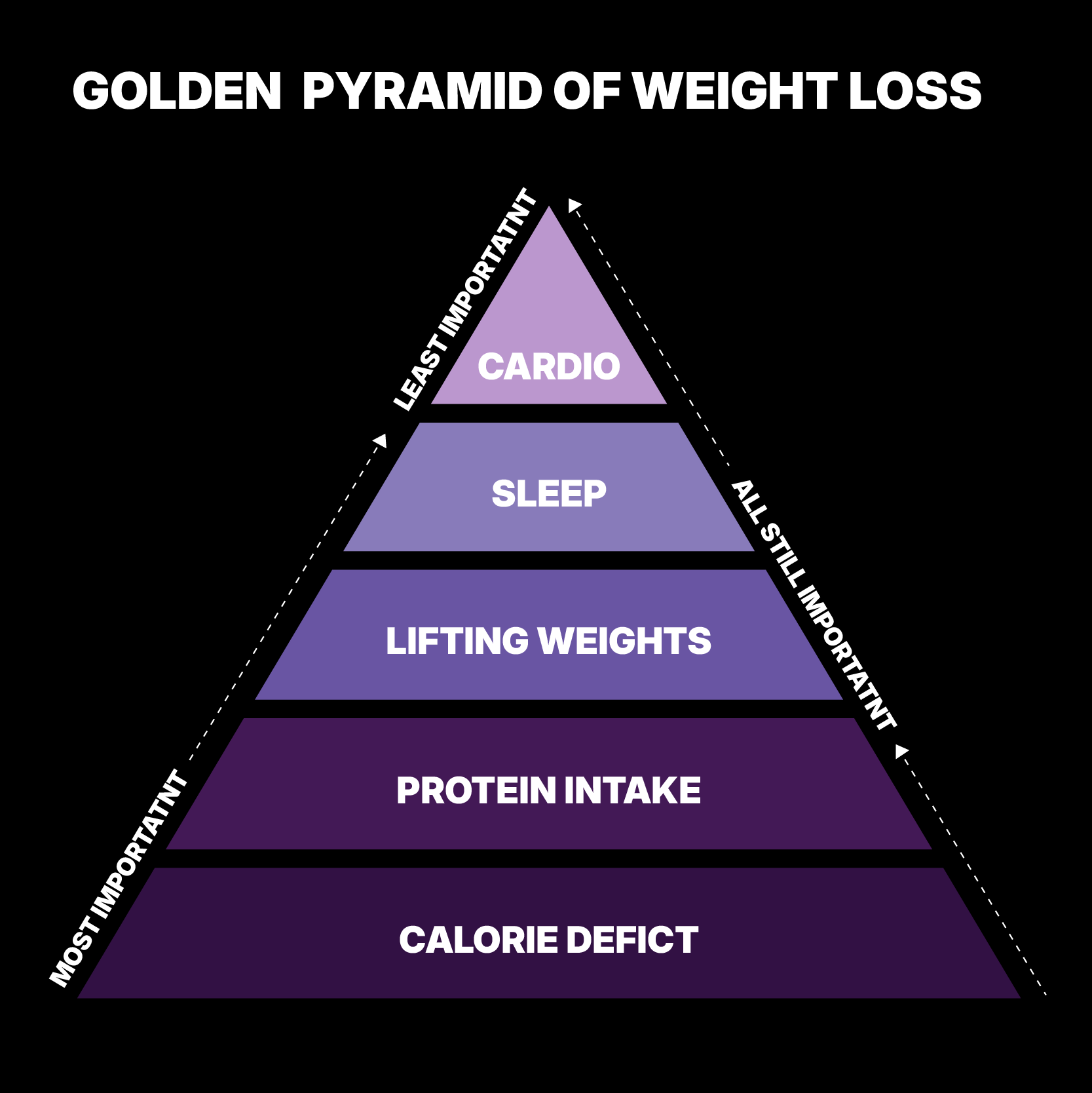
Start Your TransformationThis is the key to weight loss. If you are not in a caloric deficit, you are not going to lose weight. Use the TDEE calculator on www.abhifit.com to measure your daily calorie intake to maintain your current weight & then eat lesser calories while maintaining your required balanced diet.
Cardio is not enough to burn all the necessary calories in a proper and efficient way for long term weight loss success. Weight training will help boost your metabolism, help burn more calories for a longer duration, and in general lead to a better body composition.
Protein is regarded as the single most important nutrient for losing weight. Our bodies use more energy to metabolize protein when compared to carbs and fats. A good personal trainer having expertise in nutrition can guide you in detail on what exactly to eat for proteins, fats and carbs.
Water is the key of life and essential for weight loss. There are studies in which the participants have burned a lot more calories just after some time of drinking water and this effect lasted for a while. You must drink sufficient amount of water as per your daily level of activities.
Sleep is essential for the body to do its work well including balancing hormones, reducing stress, digestion, building muscles and much more. Poor sleep has been linked to weight gain and muscle loss. You must get sufficient amount of sleep everyday. You should feel rested & fresh when you wake up.
You don't need another temporary fitness challenge. You need a proven system, expert guidance, and consistency.